
CCL and Copper Foil Price Increases: How They Flow Into Your PCBA Quote
Opening Introduction
CCL and copper foil increases reach a PCBA quote through the bare-board line, and each stage absorbs only a share of the hit: copper foil is roughly 42% of a laminate’s cost, laminate is 30-40% of a bare board’s fabrication cost, and the bare board is typically 10-20% of a turnkey PCBA price. In 2026, Kingboard has raised laminate prices roughly nine times (FR-4 up more than 50% year-to-date) and LME copper set an all-time record above $14,800 per tonne in September. Because of that dilution, a 50% CCL increase adds about 2-6% to a typical assembled-board quote, but 10% or more on heavy-copper and high-layer-count builds. Before comparing any two quotes, check the validity window and the material escalation clause first: in this market, how long a price holds matters more than the number itself.
If you have asked for a PCBA quote at any point since spring 2026, you have probably run into at least one of three things: a higher unit price on the same Gerber files, a validity date measured in days instead of months, or a new note about material price adjustments that was never there before. None of that is your supplier improvising. It is the upstream market working its way down to your quote, one tier at a time.
Most of what has been written about the 2026 CCL and copper rally explains why the market is hot: AI servers, resin shocks, foil allocation. That is useful context, and we will summarize it briefly. But as a factory that sends these quotes out every day, we notice that almost nobody explains the part buyers actually ask us about, which is the arithmetic. How much of a 15% laminate increase actually lands on your assembled board? Which line of the quote does it hit? And how do you read a quotation so you can tell a market-driven increase from padding? That is what this article is.
Everything below reflects conditions as of September 2026. The numbers that move fastest are flagged, and the closing section explains which ones to re-check before you order.
What CCL and Copper Foil Are, and Why They Set the Floor
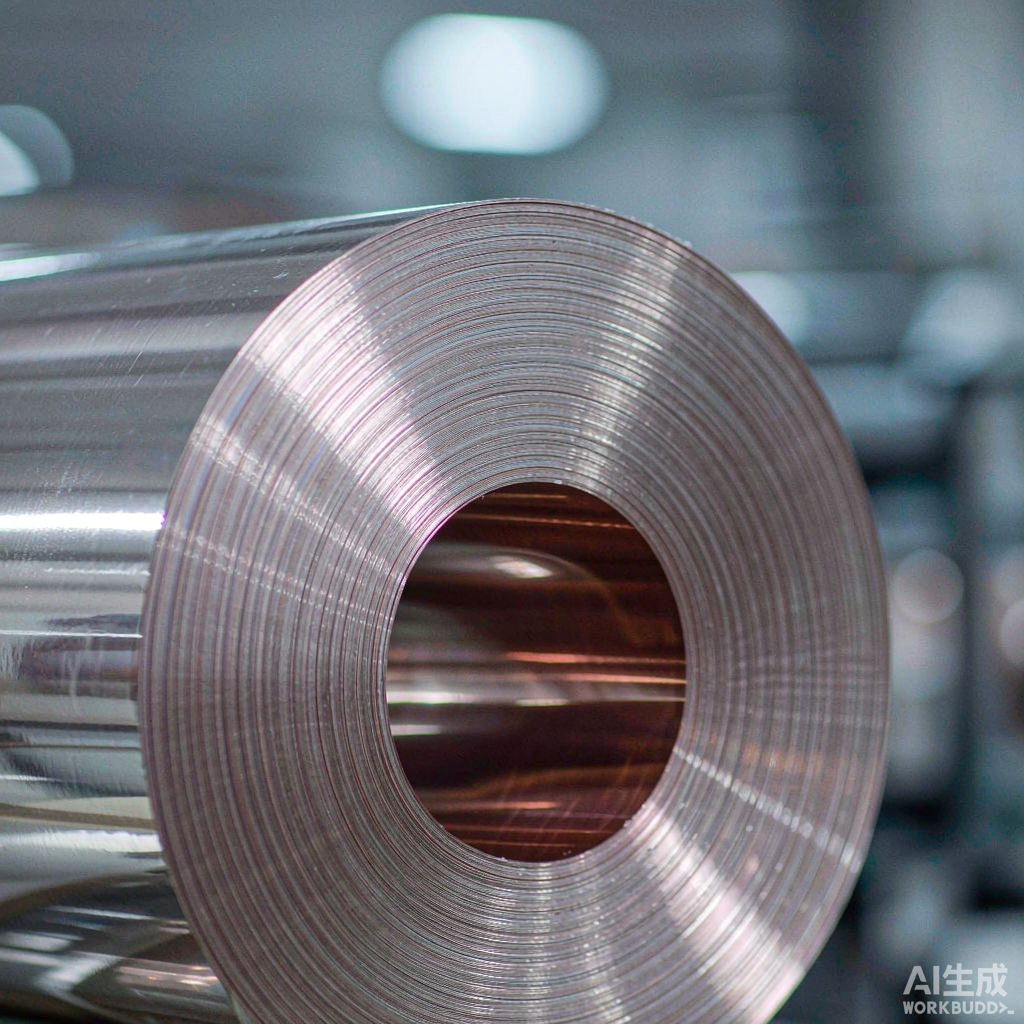
Every rigid PCB starts as a copper-clad laminate: a sheet of glass fabric impregnated with resin, with copper foil pressed onto one or both sides. Multilayer boards stack these cores with prepreg, the partially cured resin-fabric sheets that bond the layers together. When people say “laminate prices,” they mean this material family, and it is the single largest material input in a bare board.
Copper-clad laminate (CCL) is the rigid insulating base of a printed circuit board, made by laminating copper foil onto glass fabric impregnated with resin.
The copper foil itself is priced in two independent parts. The first is the value of the copper cathode the foil is electrodeposited from, which tracks the LME and SHFE metal price. The second is the foil maker’s processing fee, the charge for actually drawing, treating and finishing the foil, which is set commercially between foil makers and laminate mills. Kingboard’s July 2026 notice moved both: laminate prices up 10-15% depending on grade, and copper foil processing fees up 5 RMB/kg for foil of 1.5 oz and below, 8 RMB/kg at 2 oz and above.
Copper foil pricing has two parts, the LME cathode value of the copper itself and the foil maker’s processing fee, and laminate mills adjust them independently.
There is a third foil category worth knowing because it explains most of the AI-era headlines: HVLP, or hyper very low profile foil. Standard electrodeposited foil has a rough tooth that helps it bond to resin but scatters high-frequency signals. At 224 Gbps that roughness becomes a signal-integrity problem, so AI server and 800G switch boards need the ultra-smooth grades, and the hyperscalers have contracted most of that capacity directly. Industry estimates put the 2026 supply gap at around 28%, widening before it closes.
HVLP copper foil is the ultra-low-roughness foil grade that 224 Gbps signal integrity requires, and AI platform builders have contracted most of its capacity years ahead.
Inside the laminate itself, copper foil is the largest single cost at roughly 42% of a typical FR-4 sheet, with resin at about 26% and glass fabric about 19%. That structure matters for everything that follows: raw materials together are around 90% of a laminate mill’s production cost, so when foil, resin and glass all tighten at once, the mill has no engineering cushion to absorb it. The increase is structural, and it gets passed on.
What Actually Happened to Prices in 2026
The year built in stages rather than one shock. Small domestic mills moved first in February on standard grades, citing glass and chemical inputs. In March, Resonac announced a 30%-plus increase across its CCL and prepreg lineup, and Kingboard began a series of notices that has continued roughly every three to five weeks since, about nine rounds by September, with cumulative FR-4 increases above 50% year-to-date and some categories approaching the 2021 peak.
Summer brought the steepest moves. The headline notices, as of September 2026:
| Maker | Notice | What moved |
|---|---|---|
| Kingboard | Jul 6, 2026 | FR-4 1.3mm and above +15%, prepreg +15%, CEM-1/22F +10%, foil processing fees +5 to 8 RMB/kg |
| Kingboard | Aug 28, 2026 | Laminate +10%, prepreg +20% (about the ninth round of the year) |
| Nanya Plastics | Aug 21, 2026 | All CCL and prepreg +10-15% (tenth adjustment of the year) |
| Panasonic | Effective Sep 1, 2026 | General multilayer CCL and prepreg +30%, low-loss MEGTRON/XPEDION +15%, package substrate +30%, CEM-3 +30%, FCCL +15% |
| Shengyi and others | Through the year | Parallel adjustments on standard and AI grades, smaller increases for contracted tier-1 buyers |
Reference prices tell the same story. Industry reference pricing for standard FR-4 moved from about 162 RMB per square meter in January to about 260 by mid-July, roughly 60%, while CEM-3 climbed from about 140 to 222 RMB per square meter. Lead times followed: what fabricators bought in 2-4 weeks now quotes at 8-12 weeks, and specialist high-speed laminate has stretched to as long as 140 days.
Here is the detail most commentary skips. Over the same January-to-July window, the reference price of standard electrolytic copper foil moved from 122.2 to 131.5 RMB/kg, about 7.6%. Copper alone did not double the price of a laminate. What doubled the laminate was copper moving at the same time as glass fabric, roughly double its 2025 low, and resin, up more than half with delivery stretching from three weeks to fifteen, plus an AI demand layer absorbing high-end material faster than mills can add capacity. New greenfield CCL lines take 12-18 months to build, and the weaving machines for electronic-grade glass cloth are quoted more than a year out.
And the copper leg did not stand still either. After drifting through the spring, LME copper set a series of all-time highs in September, touching $14,858.50 per tonne intraday, up about 16% year-to-date and nearly 48% over twelve months. Every dollar of that flows into foil cathode cost, which is why foil fees and laminate prices get renegotiated in rounds rather than once.
The Cascade: How an Upstream Increase Reaches Your Quote
Follow one dollar of copper through the chain and you can see exactly where your quote picks up the increase.
A material price increase flows through a supply chain when each tier passes its share of the higher input cost into its own selling price rather than absorbing it.
The chain has four hand-offs, and each one applies a percentage to only a percentage:
| Stage | Share of next stage’s cost | 2026 move |
|---|---|---|
| Copper cathode to foil maker | Foil is about 42% of CCL cost | LME +16% YTD, record $14,858.5/t; processing fees +5 to 8 RMB/kg |
| CCL mill to PCB fabricator | CCL is 30-40% of bare-board fabrication cost | FR-4 up 50%+ YTD; lead times 2-4 weeks to 8-12 |
| Bare board into the PCBA quote | Board is 10-20% of a turnkey quote, 5-15% at volume | Board line rising 15-40% depending on construction |
| Everything else in the quote | Components 50-70%, assembly 10-15%, tooling and test the rest | Mostly independent of CCL, and that is exactly where the dilution comes from |
Two wrinkles worth knowing. First, copper enters your quote twice through the bare-board line: once in the foil already bonded to the laminate, and again as electroplated copper in the holes and outer layers, which is priced off the same metal market. Second, the laminate tier does not move in real time. Mills contract rather than spot-price, so a laminate-driven increase typically arrives weeks after the commodity move, and it is stickier on the way down than on the way up.
Cost dilution is the effect by which a large percentage increase in one input becomes a smaller percentage increase in the finished product, because that input is only a share of the finished cost.
The Dilution Math: What 50% Actually Does to Your Quote
Take a representative mid-volume build we could quote in any given week: a 4-layer industrial control board, 1.6mm FR-4, 1 oz signal layers with 2 oz power, HASL finish, turnkey, in the low thousands of pieces. For a $100 assembled board, a typical cost stack looks like this:
| Line in the quote | Typical share | Exposed to CCL and foil? |
|---|---|---|
| Components (BOM) | 50-60% | Mostly no; IC and passive pricing is its own market |
| Bare-board fabrication | 12-18% at this volume | Yes; laminate and prepreg are roughly a third of this line |
| Assembly and test | 18-25% | Indirect only, through energy and labor |
| Tooling amortized, freight, margin | 8-12% | Freight partly, through fuel and rates |
Now apply the 2026 increases to the one exposed line. If laminate and prepreg inside that $15 bare-board line cost about $5.25 and their price rises 50%, the board’s material cost rises about $2.60. Add the foil and plating pass-through on the copper side, a few more percent of the line, and the bare board moves from $15 to roughly $17.50, up about 17%. The assembled quote moves from $100 to about $102.60. That is a 2.6% increase, and that is the whole mechanism in one paragraph.
A 50% CCL price increase raises a typical turnkey PCBA quote by roughly 2-6%, because laminate is about a third of the bare board and the bare board is about 10-20% of the assembled product.
The same arithmetic runs in reverse at the exposed end of the range. On a heavy-copper power board or a 16-layer build on mid-loss material, laminate can be 45% of the bare-board cost and the bare board a quarter of the quote, and there the same upstream move lands in double digits. We have re-quoted both kinds of boards this year, and the spread between them is the single most useful thing a buyer can understand about this market.
One honesty note: CCL is the biggest driver, not the only one. Resin, glass, energy, freight and the USD/CNY rate all move your quote independently, and an ENIG finish carries its own gold exposure. When your quote rises more than the dilution math suggests, one of those is usually why, and a supplier who itemizes the board as its own line can show you exactly which.
Which Boards Are Most Exposed
Three design variables decide how hard your quote gets hit: copper weight, layer count, and material grade.
Copper weight first. A 1 oz signal board carries copper at roughly 15% of its substrate and plating cost, so even record LME prices only nudge it. A 2 oz power board sits near 30%. At 4-6 oz, the territory of power electronics and busbars, copper is 60% or more of the substrate, and the quote effectively tracks the metal market.
Heavy-copper boards, at 3 oz per square foot and above, carry copper exposure of 60% or more of substrate cost, so their quotes move nearly in step with the copper market.
Layer count matters because prepreg scales with bonding interfaces. An 8-layer board buys more resin-fabric material than a 4-layer, and prepreg, which took a 20% increase in a single Kingboard round in August, is often the fastest-moving line item in a multilayer stack.
Material grade is the widest range. Standard FR-4 is up more than 50% year-to-date, which is steep, but the low-loss M6 through M9 families that AI-adjacent designs specify have risen far harder. If your drawing names one of those grades, your exposure is a different order of magnitude from the dilution example above.
Surface finish is the quiet one. ENIG deposits nickel and a thin gold cap on every pad, and gold has traded near $2,700 an ounce in 2026, which makes an ENIG board carry roughly an order of magnitude more finish cost than HASL before any of this year’s moves.
| Board profile | Copper or substrate exposure | Sensitivity to this cycle |
|---|---|---|
| 1 oz signal board, 2-4 layers, HASL | Copper about 15% of substrate and plating | Low; quote moves low single digits |
| 2 oz power board, 4-6 layers | Copper near 30% | Moderate; foil and prepreg both land |
| 4-6 oz heavy copper | Copper 60% or more | High; tracks the copper market |
| 16+ layers, low-loss grade, ENIG | CCL 40-45% of board cost | Highest; double-digit re-quotes common in 2026 |
How to Read Your Quote for Material Pass-Through
In a flat market, a quote is a number. In this one, the terms around the number carry more information than the number itself. Three things to find on any quotation you receive:
1. The validity window. Validity of 30-60 days used to be routine; since May 2026 many Chinese mid-tier factories have compressed to a week or less, quoting on a lock-the-next-two-to-three-months basis. Short validity is not necessarily bad faith, since it is a supplier refusing to carry commodity risk for free, but you should know which kind you are holding.
A quote’s validity window is the period during which the supplier is contractually bound to the quoted price; shorter validity in a rising market transfers commodity risk to the buyer.
2. The material escalation clause. Some quotes now state the conditions under which the price re-opens between order and delivery. If it is there, read which index it references and whether it is capped. If it is not there, ask.
A material price variation clause defines which commodity indices a supplier may reference, in which direction, and with what cap, when re-pricing between order and delivery.
3. Whether the bare board is its own line item. A bundled all-in number gives you no way to verify what moved. An itemized quote lets you compare the board line against laminate reference prices and ask precise questions instead of blanket ones.
Index-linked pricing ties a contract price to a published benchmark such as LME copper, replacing repeated re-quotes with a formula both parties can verify.
And the red flags:
| What you see | What it usually means | What to do |
|---|---|---|
| Validity of 7 days or fewer | Supplier carries no commodity risk | Ask what triggers a re-quote; price the same Gerbers at two suppliers |
| No validity date at all | The number is indicative, not an offer | Get the date in writing before planning production around it |
| One bundled per-board price | You cannot audit which input moved | Request the board as a separate line |
| “Subject to material adjustment” with no formula | The supplier keeps all the optionality | Ask which indices, what cap, what notice period |
| Sudden MOQ increases on standard grades | Allocation behavior, not cost behavior | Check whether the grade itself is short, not just the price |
Five Moves Before You Place Your Next Order
Ordered by return on effort, the way we would run them on our own purchasing:
1. Get the validity window in writing, and negotiate it upward. Push for 60-90 days where your volume justifies it. Every day of validity is a day of commodity risk the supplier carries instead of you, and in a market where laminate rounds land every three to five weeks, that is real money.
2. Ask for the bare board as an itemized line. You cannot audit what you cannot see. Once the board is separate, a five-minute comparison against published FR-4 reference pricing tells you whether an increase is market or margin.
3. Audit the copper weight and finish on the drawing. The cheapest copper you never needed to buy is the copper you specified out of habit. If the power path does not require 2 oz, or the connectors do not need gold, that is a bigger saving than any negotiation this year. A design review with your fabricator before the design freezes is the single highest-ROI hour available.
4. Qualify a second laminate now, while your primary is still available. Substitution takes weeks when it is a plan and months when it is an emergency. A hybrid stackup, with low-loss material only where signal integrity demands it, cuts exposed material cost without touching performance.
5. Watch the notice cycle, not the copper chart. Glass cloth is the leading indicator: when cloth prices stabilize, laminate pressure historically eases within four to six weeks. Copper makes the headlines, but the cloth index tells you whether your next quote will be higher.
| Move | What it protects | Effort |
|---|---|---|
| Written validity, 60-90 days | Schedule and budget lock | One email |
| Itemized bare-board line | Ability to audit increases | One request at quoting |
| Copper and finish audit at design | Removes exposure permanently | One review call |
| Second-source laminate qualification | Supply when allocation hits | Weeks, done in parallel |
| Tracking the notice cycle | Timing of your order placement | Fifteen minutes a month |
What It Looks Like From the Factory Floor
We sit on the receiving end of these notices, so a word on how the mechanism actually behaves, the part that never makes it into market commentary.
When a mill’s notice lands, it does not change the price of the laminate already in our store; it changes the price of the next container. Existing stock buffers the increase for weeks, which is why two quotes for the identical board a fortnight apart can differ honestly. Conversely, when we quote a lead time of eight weeks on material we do not yet hold, we are quoting a price we have not paid yet, and that is exactly why validity windows across the industry have compressed.
Before this year, we priced a board from a laminate cost that moved a couple of times a year. Now, before a quote goes out, we check three things we never used to: which grade and thickness the customer’s stackup actually consumes, what our current stock already covers, and what the mills’ open orders are re-priced at for our delivery window. That last step, pricing the material we will buy rather than the material we bought, is the whole difference between 2024 quoting and 2026 quoting.
The customers who have been surprised this year are almost never the ones who paid the most. They are the ones who compared a unit price in March against a unit price in July, ignored the validity dates on both, and planned a production release around the March number. The ones having an ordinary year ask the boring questions: how long does this price hold, which notice is it exposed to, and what happens if the mill moves again before we release. We would rather answer those a hundred times than surprise someone once.
FAQ
How much of my PCBA quote is actually affected by CCL and copper prices?
On a typical turnkey quote with a standard FR-4 board, about 2-6%, arriving through the bare-board line. On heavy-copper, high-layer-count, or low-loss-material builds, 10% or more. The bare-board line itself moves 15-40% in those configurations, which is where the pass-through is visible before dilution smooths it out.
If copper prices fall, will my PCB price come back down?
Partially, and with a lag. Laminate is contracted rather than spot-priced, and mills have historically passed increases faster than decreases. The more useful signal is glass cloth: when cloth pricing stabilizes, laminate pressure tends to ease within weeks. Watch the cloth index rather than the copper chart if you are timing an order.
My quote is only valid for seven days. Is that normal in 2026?
Yes, it became common from May 2026 onward, usually alongside an index-linked escalation clause. It reflects genuine supplier risk rather than bad faith. The questions that matter are what triggers a re-quote, what index is referenced, and whether the clause works in both directions.
Get Your Boards Quoted Against Today's Numbers
If you are comparing PCBA quotes right now, send us your Gerber files and BOM. We will return an itemized quote with the bare board, components, assembly and test as separate lines, with the validity window and material terms stated explicitly, so you can see exactly what the market is doing to your number and how long our number holds. That is how we quote every build, whether you need PCB assembly services, bare-board fabrication, or full turnkey manufacturing from a single partner.
Pricing data in this article reflects publicly reported supplier notices and exchange prices as of September 2026. Commodity and laminate prices move quickly; treat the percentages as directional and confirm current terms with your supplier before ordering.
About US
You may also be interested in…

About the Author
Andrew Zhan – R&D Engineer at JKRGLO.com
With over 14 years of R&D engineering experience in the PCB industry, Andrew Zhan brings deep expertise in circuit design optimization and DFM implementation. He focuses on translating complex design requirements into production-ready solutions, driving technical innovation for both prototype and mass production.
Working closely with cross-functional teams and clients, he ensures rigorous quality validation and seamless technical communication across the full project lifecycle. Andrew is committed to delivering reliable, high-performance PCB solutions that consistently exceed customer expectations.
Table of Contents
Still, need help? Contact Us:
Need a PCB or PCBA quote?
Tag:
best pcb manufacturers
PCBA
PCB
copper foil price increase
PCB material price increase 2026
CCL price increase